8 Common Types of Sewing Pins You need To Know
Hi guys. Today I would like to talk about sewing pins. It is one of the debated topic in the sewing community whether to use it or not because it may cause injury. When I was a beginner, I was also a bit skeptical however, after using it for a while for my projects, I felt it should be the must-have item in a sewing kit. If you have decided to use it, picking the right one could be slightly difficult because there are different variations to choose from. If you have such confusion at the moment, let me share the best types of sewing pins you can count on after using them for years.
Before I move forward, let me share how useful a sewing pin is.
The role of sewing pins
1. It prevents fabric shifting by aligning both top and bottom layers together.
2. It helps maintain accurate seam lines.
3. It helps test the fit of the garments.
4. It can hold fabric pieces together while cutting, fitting, and stitching processes.
My Favorite Sewing Pins for Dressmaking
1. Glass Head Pins
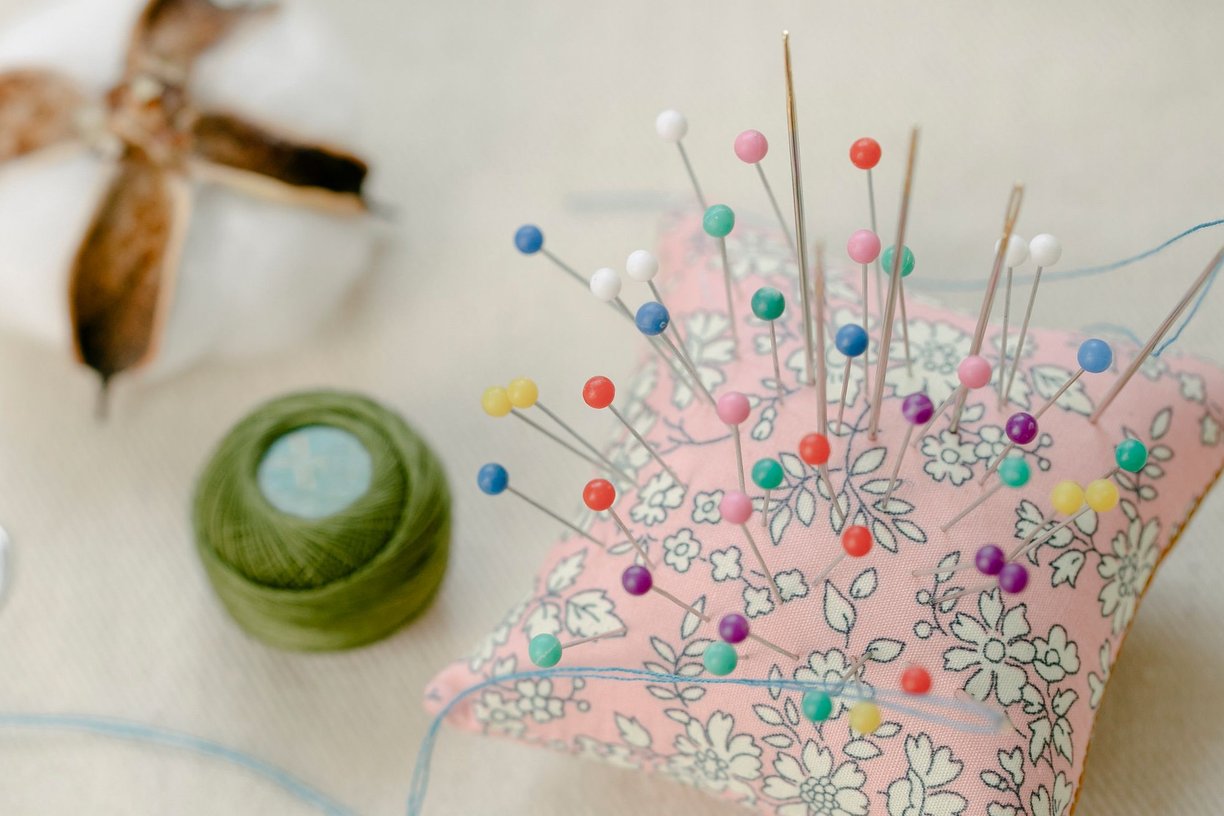
It is one of the most commonly used pins for sewing because they are strong and come in a variety of colors and sizes. The perfect size for this pin is 1⅜” length and it’s usual thickness is about .6mm. They are made with nickel-plated steel and can be used to pin medium-weight woven fabrics.
It is similar to plastic headed pins however, the glass head ones are heat-resistant and slightly smaller. You can iron the fabric without any worries and this is one of the main reasons it is my favorite one. Because of these qualities, it is my preferred choice for most projects.
2. Ballpoint Pins
Similar to ballpoint needles, this pin has a blunt and rounded tip to hold the fabric together. It is also made with nickel-plated steel with a fine shaft measuring 0.5mm.
Just like how the ballpoint needles are suitable for knits and stretchy fabrics, it is also used for such fabric. The only con about this pin is, it is usually made out of plastic and isn’t heat-resistant.
3. Silk Pins
This is a very fine pin with a shaft of 0.4mm thickness made for silk and other delicate fabrics such as rayon, cotton lawn, chiffon, georgette, organza etc. They are usually sharp, long and made of completely metal. Whenever I start a new project with any lightweight fabrics, this is what I choose and it helps fabrics stay together all the time.
4. Plastic Pins
It is not the strongest one either, isn’t heat resistant however, these are inexpensive pins that come with various sizes and unique head shapes such as heart and flowers. I like them for their shapes and use them when I manage multiple projects at once.
5. Safety Pins
It is not the most recommended one however, If you are in a hurry, you can use these pins once in a while, especially for basting. It can hold three layers perfectly while sewingtop, batting, and backing.
6. Magic Pins
These pins feature a silicon head with different shapes such as cone, flat-head etc. They glide through the fabrics smoothly and are suitable for folding multiple layers. They are heat-resistant which allows them to iron directly into the pins without the fear of melting.
This is a new addition in this industry, created by Taylor Seville Originals to reduce hand fatigue and perfect precision. Their heat resistant Comfort Grip™ handles are extremely easy to grasp and handle.
7. T-Pins
These pins come with the T shaped design, suitable for upholstery fabrics. It is 1½” long, made of nickel-plated steel and is heat-resistant. It isn’t recommended while sewing garments as it can glide through only heavy fabrics.
8. Applique pins
Unlike dressmaking pins, this pin is built for precise needlework and quilting. These are short pins, usually around 1/2 inch to 3/4 inch and are used for small fabric pieces and delicate fabrics. It can be used to pin the foundation fabric without interfering with the sewing line and prevent snagging. If you plan to do any Applique work, I highly suggest you always go with it.
FAQs
1. Can I iron over sewing pins?
Yes, you can, however, it should be heat-resistant pins such as glass-head pins, magic pins etc and ensure it doesn’t have a plastic-heads because they can’t resist the heat.
2. What can you use instead of sewing pins?
For alternatives, you can use fabric clips, double sided tape, binder clips, basting with thread, pattern weights and spray adhesive.
3. Why do people use pins when sewing?
People use it to prevent fabric shifting, maintain accurate seam lines, test garment fit and hold the fabric during various processes of sewing.
4. What is the difference between quilting pins and sewing pins?
Quilting pins are generally longer, sturdier and used for quilting whereas the sewing pins are shorter, thinner and used for sewing garments, holding pattern pieces together, holding the edges and hem etc.
Pick the right one for your needs
Choosing the right pin for you from the list could be confusing, however, opting for glass head pins would be enough for most sewing tasks as it comes with heat-resistant ability and has various sizes and shapes to offer. If you don’t like it, you can read other pins and choose the one that matches your requirement. If you have any questions about any of these pins, do let me know in the comments and I’ll be happy to assist you. Cheers!