5 Most Common Types of Buttons for Clothes & Their Uses
Buttons may be a smaller part of a garment but choosing the right one will improve its overall aesthetics. When I joined the fashion design class, I learnt which one I should choose for a specific garment and it made my job much easier. But not everyone goes for such classes and I have noticed a lot of newbies have no idea about the right selection.
If you are also one of them, this article may clear your doubts. Here, you’ll find various types of buttons and materials used and picking the right one for your next garment in just a couple of minutes.
Types of buttons
1. Two-Hole Flat Buttons
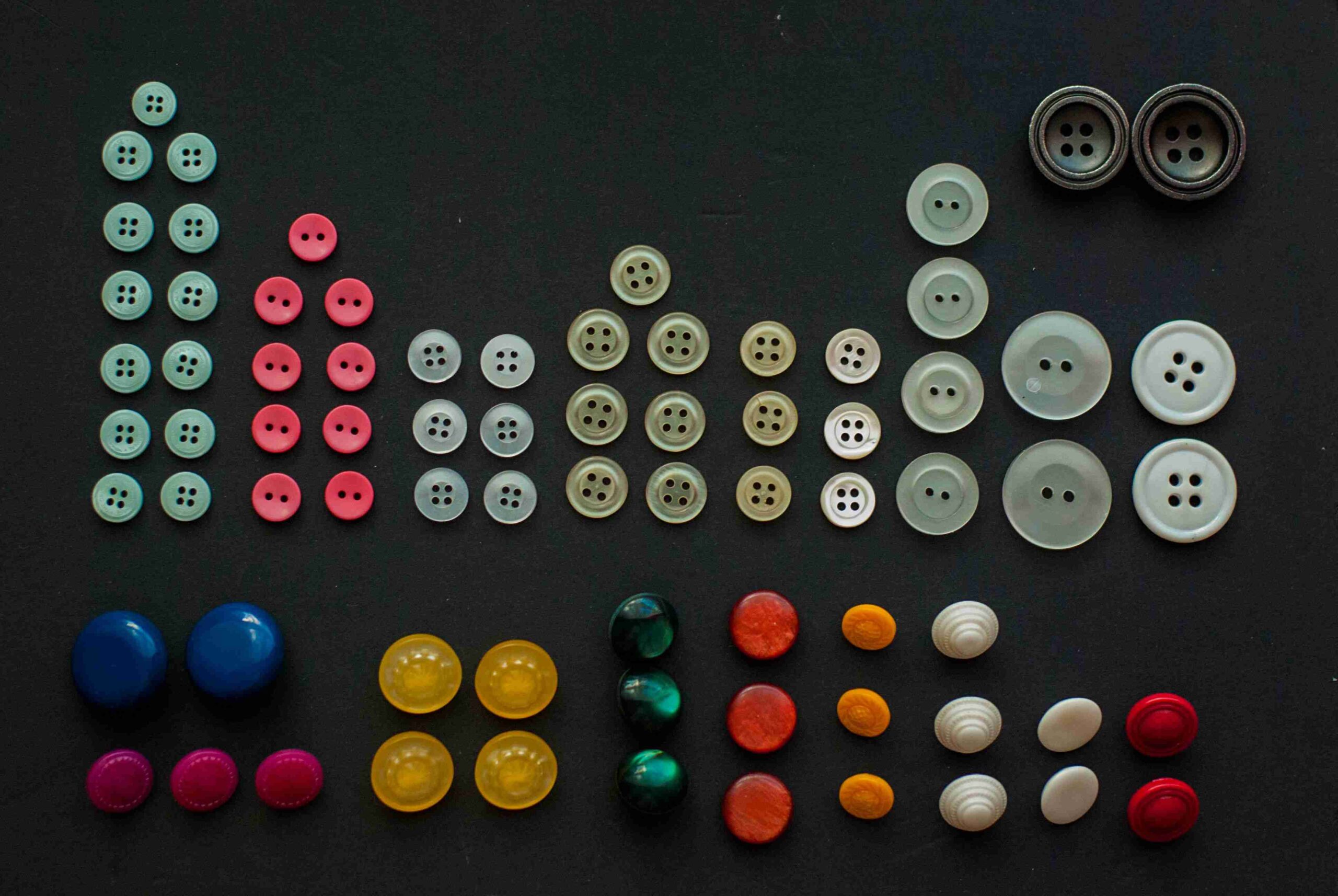
These are generally flat, disc-shaped with two holes in the centre of the button; however, they also come in other variations such as square, flower, heart, triangle, etc. This is the most commonly used button you’ll find on many garments because they are simple, lightweight and easy to sew, mainly due to fewer stitching points. It is mainly used in garments that don’t require heavy pulling.
Uses:
1. Light to medium weight fabrics.
2. Casual shirts.
3. Blouses.
4. Children’s clothing.
5. Pajamas.
6. Jackets & coats.
7. Pillowcases.
2. Four-Hole Flat Buttons
Similar two-hole buttons, these buttons usually come in a round or cross pattern with two extra holes in square layout. The 4 holes make it easier to sew a fabric to hold it firmly. Due to more stitching, it is mainly used in garments that are opened and closed often. It is also stronger than the two-hole button as it’ll have more thread in a secure way.
Uses:
1. Shirts.
2. Uniforms.
3. Trousers.
4. Light jacket and coats.
5. Workwear.
6. Tops & Blouses.
3. Shank Buttons
With no holes, a shank button (also known as shank back button) features a solid top surface and small loop on its back where thread is sewn to attach the button onto fabric. The most common shape of this button is round but it also comes in oval, square and rectangular shapes.
Due to its design, it is suitable to pass through bulky fabrics like coats. It is also used as decoration on fabric items and jewellery.
These buttons are made with various materials such as: metal, plastic, pearl, wood, shell, leather, enamel, crystal, fabric, and glass.
Uses:
1. Coats.
2. Jackets.
3. Blouses.
4. Bags.
5. Waistcoats.
6. Upholstery buttons.
4. Toggle Buttons
It is a unique style of button that doesn’t require a buttonhole. Instead, it features a loop and a button with two holes, primarily aimed for outwear projects. The most common material used for this button is wood, horn, metal and plastic. I’ve made a limited number of garments with this button as I’m not a big fan of it.
Uses:
1. Coats and Jackets.
2. Caps.
3. Vests.
4. Bags.
5. Sweaters and other winter garments.
5. Stud or Snap Buttons
It is the most unique button on this list because it doesn’t require sewing. Instead, it needs a screw to pierce through the fabric from the back to the front and press the top piece to hold it securely. It may seem like a daunting task but it is actually pretty easy If you have the right tool or the kit.
These buttons are generally made with metal and can be used on garments or decorative purposes.
Uses:
1. Jeans.
2. Denim Jackets.
3. Workwear garments.
4. Straps, belts and bags.
6. Layered Buttons
When there are two or more buttons in a single one, it is called “layered buttons”. It is mainly used on garments and decors to add to the whimsiness. It could be made of different materials from plastic to wood.
Uses:
1. Garments and upholstery.
2. Home decors.
7. Decorative.
These are meant to be non-functional and used in fake pockets. It is a fun way of displaying the creativeness of the designer. It could be designed with a random object, fruit, vegetables, jewelry etc. These buttons are usually made with plastic.
Uses:
1. Collars.
2. Pockets & waistbands.
3. Children’s Clothes.
4. Bags & Pouches.
5. Cushion covers.
Types of button materials:
1. Plastic
Plastic buttons mostly feature in two/ four-hole buttons, shank buttons and toggles. They are usually made in acrylic, nylon or polyester. They are affordable, lightweight and can be sewn in any type of garment.
Other than garments, it is being used for decorative purposes as well. It comes in a variety of colors with no restrictions.
2. Mother of pearl
These are iridescent buttons made with certain shells that contain nacre such as oysters and mussels. It is usually used in two/ four-hole and shank buttons. The natural colors of these buttons are white, gray, beige, pink and blade but it can be recoloured into other colors like blue, green and gold.
3. Horn
These buttons are created usually with horns of ox or buffalo and sometimes with cows and bison. It is most used in suits, shirts, blazers and sport coats to add elegance. You can get it in natural shades like rich browns or soft ivories and can manipulate it into yellow, black or grey.
Compared to other materials, it’ll be expensive due to its cost of production and aesthetic appeal.
4. Corozo
It is a nut material that grows on elephant trees. It has a smooth resin-like texture, is highly sustainable and is very tough to break. In the buttons industry, it is also known as “imitation ivory buttons”. This button requires high polishing and coloring during the manufacturing process.
This material can be various for numerous garments such as shirts, dresses, tops, blouses etc.
5. Wood
They are made from natural woods such as bamboo and maple. They are highly durable and environmentally friendly. They are mainly used on garments for decorative purposes. It can be used for 2-hole flat buttons, toggles and coats.
6. Metal
It is generally made with tin and stainless steel but it can be also made from various blends such as aluminum, silver, brass, copper, iron, stainless steel, and zinc alloy. It is sturdy and durable, mainly used for heavier fabrics such as denim or down coats.
7. Leather
It could be made from faux or genuine leathers made from pig, sheep or cowhide. They mainly come with two designs; with or without stanks.The stank-less leather buttons could knot or roll into toggles whereas the stank could be either braided or plain pasted.
FAQs
1. What are the different types of garment buttons?
They are two-hole flat buttons, four-hole flat Buttons, shank buttons, toggle buttons, stud or snap buttons.
2. What are the best buttons for shirts?
Mother of pearl and Polyester buttons are the best options for shirts.
3. What are shank buttons used for?
They are used on thick fabrics like heavy coats, jackets and waistcoats.